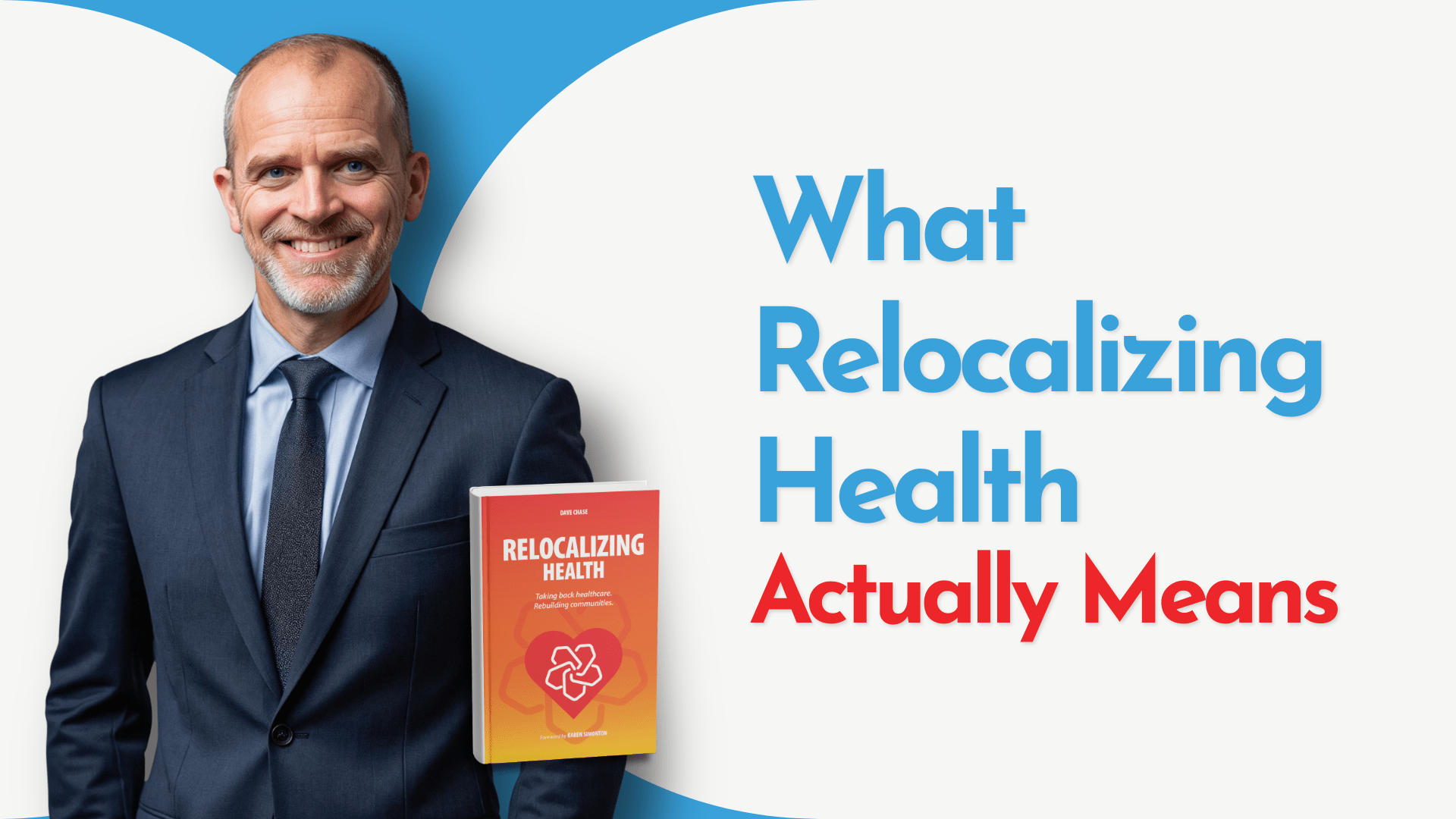
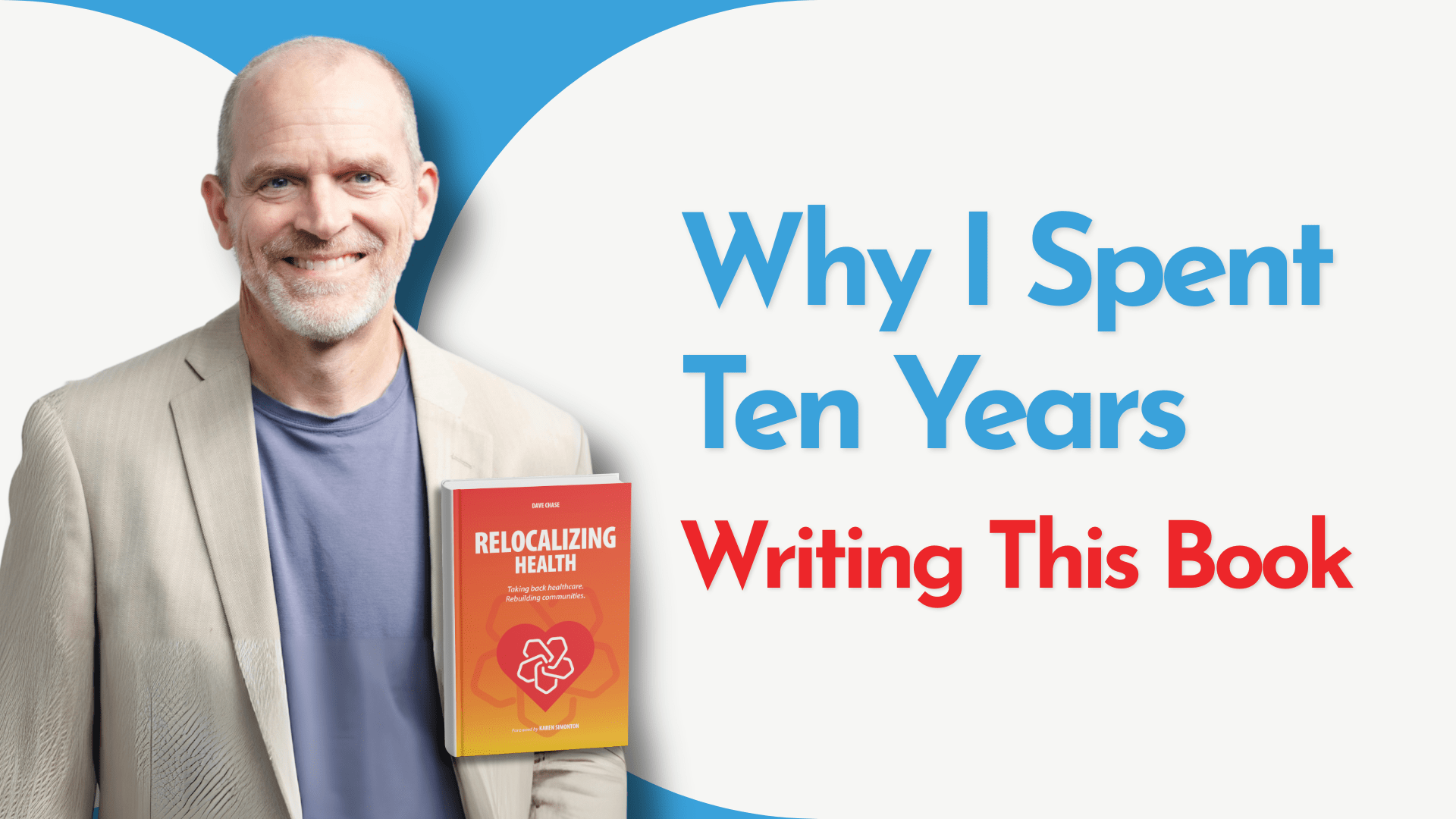
Relocalizing Health is not a theory about what could work. It is a decade of documentation about what already does. Here is why Dave wrote it and what set that decade in motion.
Most books about American healthcare start with a description of what is broken. This one does not.
Relocalizing Health starts with the communities that have already fixed it. Alabama, Alaska, Ohio, Wisconsin, Florida. Real employers, real results, documented over five, ten, twenty, and thirty-year timelines. The book is built on proof that already exists.
But the reason Dave Chase spent ten years writing it starts in a much smaller, more personal place.
Where It Started
A close friend died from a preventable medical error. He left behind a ten-year-old daughter.
That loss did something to Dave that years inside healthcare technology and health system innovation had not fully done. It made him unable to look away. He had spent his career building software for health systems, working at the intersection of innovation and care delivery, close enough to the machinery to understand how it worked and why it kept producing the same outcomes. He had seen the misaligned incentives up close. He had seen smart, well-intentioned people operating exactly as the system demanded and getting results that hurt the people the system was supposed to serve.
What changed after his friend died was not his understanding of the problem. It was his tolerance for working around it.
He stopped trying to optimize inside the broken model. He started documenting the communities that had decided to build something different.
What Relocalizing Actually Means
Relocalizing health is not a policy idea. It is not a position on a political spectrum. It is something that is already happening in the communities that anchor this book, and it looks like the same thing in every place where you find it.
Healthcare dollars that used to leave a community and enrich distant corporations staying home instead. Employers deciding to treat the health plan like a line of business they are actually willing to manage. Communities building the cooperative infrastructure that lets neighbors do together what none of them could do alone. And the savings from all of that being reinvested into the people and places that generated them.
Dave calls the financial expression of this the Health Rosetta Dividend. The communities in the book prove it works across every timeline, five years, ten years, twenty years, and thirty years.
The Field Manual
Dave is clear about what this book is not. It is not a manifesto. It is not a diagnosis of what is wrong. There are enough of those.
It is a field manual. Written for three audiences. Employers who are done overpaying for a plan that underserves their people. Advisors who are ready to build fiduciary-grade plans they can stand behind. Community leaders who understand that healthcare cost is an economic development problem with a documented solution.
The AI Catalyst section at the end of the book makes the stakes explicit. Artificial intelligence is displacing workers at scale. The communities that redirect healthcare savings into workforce development and social investment will build durable economies. The communities that do not will pay what Dave calls the AI Tax: unemployment, decline, and an eroding tax base. The choice is not inevitable. It is a governance decision that local leaders can make right now.
The Tools Are There
The Nautilus Health Institute exists to democratize the tools that make this possible. The playbook is documented. The proof is in the book and in the communities it describes.
What is left is the courage to act, community by community, until the transformation becomes unstoppable.
Relocalizing Health launches July 29 at RosettaFest in Nashville. Every attendee gets a copy. Dave will walk onto the main stage and introduce the book to the room.
Pre-order on Amazon now. Get your ticket at RosettaFest.org.