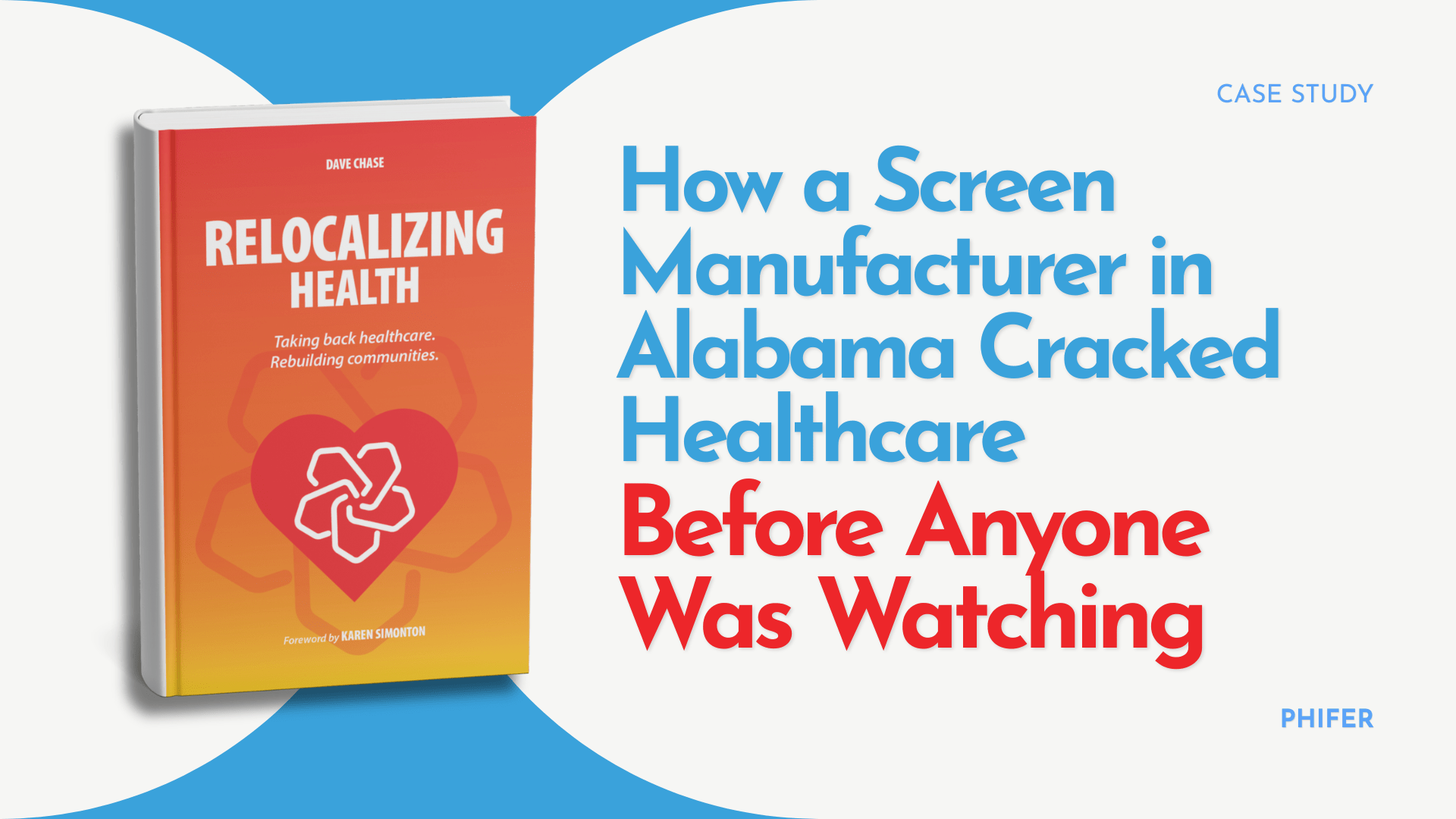
Phifer Incorporated is a 1,200-person manufacturer in Tuscaloosa, Alabama. They are also proof that the size of your organization has nothing to do with your ability to build a health plan that actually works.
Phifer Incorporated makes aluminum, fiberglass, and polyester screening. The window screens in your home, the sun-shading fabric on your lawn furniture. They have about 1,200 employees across Alabama and California. And they are the last remaining made-in-USA manufacturer in their category.
Everyone else chased cheap labor overseas. Phifer stayed.
But the reason this story matters to the Health Rosetta community is not that Phifer makes screens. It is that a mid-size manufacturer in Tuscaloosa, Alabama figured out something that most Fortune 500 companies still have not figured out about healthcare.
The Man at the Center of the Story
Russell DuBose is the VP of HR at Phifer. When he took over the role in the mid-2010s, he looked at the glide path the company was on and saw a future where benefits became unaffordable to the plan and the people on it. Those were his words.
What he did next is the part worth studying. Russell did not see healthcare as the problem in isolation. He saw it as a supply chain problem. Phifer lives and breathes lean six sigma and continuous improvement. So he asked a simple question: why are we not applying that same rigor to the single biggest line item after wages?
His answer to that question changed the trajectory of the company and eventually caught the attention of Congress.
The Blueprint
In 2017, Russell was given a copy of The CEO’s Guide to Restoring the American Dream. The Rosen Hotels story hit him. A hotel company in Orlando gave a manufacturer in Alabama the template. He said: I realized I had discovered our blueprint.
The next step was a Kaizen event. Russell put company leaders, the broker, suppliers, and a college professor in the same room and mapped the costs the way you would map a production deficit.
His line from that process is one worth repeating: it is absurd that there are no quality scores or ratings or reviews for health plans. We rate everything else we buy. And yet the thing eating our payroll we are not measuring.
So when Health Rosetta released the Plan Grader, Russell graded his plan. The first score was a 37 out of 100. That sounds low until you hear that most employers land between a 5 and a 17 when they start. Phifer was already well above average. The breakdown told them exactly where to aim.
The assessment became the punch list. And together with benefits consultant Ann Blair Gribben at Cobb’s Allen, who joined the Health Rosetta program to serve her client better, they built a seven-year roadmap: advanced primary care, transparent data, transparent pharmacy, direct contracts with the best providers, nurse navigation, and an on-site pharmacy.
What Got Built
In 2019, Phifer opened the Phifer Cares Clinic with zero cost share for advanced primary care for every member on the plan, employees and dependents alike. Within months the clinic was running at 88 percent of daily capacity and 58 percent of eligible members were actively using it.
When COVID arrived, Phifer never closed a single day. The clinic became their frontline. Testing protocols, keeping people safe and working.
After the pandemic, they kept going. Direct contracts, nurse navigation to the best providers, on-site physical therapy, a transparent pharmacy benefit manager.
And here is the part that gives the whole story its meaning. Russell became focused on generating dividends from the health plan. Not just trying to make the increases a little less steep. Savings that do not sit on the company balance sheet. Savings that get reinvested in people.
Starting in 2019: scholarships for employees’ kids. Hundreds of thousands of dollars. More than 100 students went to college with that support. In 2020: a summer enrichment program for hundreds of children so they do not lose ground over the summer. Eliminated pharmacy co-pays at the on-site pharmacy, with more than 1,700 patients benefiting. Continued bonus funding for childcare and aftercare for more than 250 working families.
The business results underneath all of it: five straight years of essentially flat healthcare spending, absorbing inflation and high-cost cancer claims. Retirement readiness climbed more than 20 points. The Plan Grader score went from 37 to 74.
A Benefits Decision That Became a National Voice
Russell testified before the House Energy and Commerce Committee on ERISA on behalf of the National Alliance of Healthcare Purchaser Coalitions. He chairs the Alabama Employer Healthcare Consortium, spreading the model to other employers across his region and state.
A benefits decision at a screen manufacturing plant in Tuscaloosa turned into a key voice in Washington and a model that other employers are now replicating.
What This Means for You
If a 1,200-person manufacturer in Alabama can do this, the excuse that you are not big enough stops being a reason. It is just a story we tell ourselves.
Russell treated the health plan like a line of business he was actually willing to manage. That is the secret. And he will share it in person.
Russell DuBose is a co-leader of the Employer Track at RosettaFest 2026, July 29 to 31 at the Gaylord Opryland in Nashville. Every session in that track is built around the employers who have already done the work and are ready to show others how.
Pre-order Relocalizing Health by Dave Chase on Amazon now. The full Phifer story is in the book. Russell will be in the room in Nashville.
Get your ticket at RosettaFest.org.